How Does an AI Companion Work? A 2026 Explainer
If you've ever wondered how an app like TidalDream can carry on a conversation that actually feels like talking to a friend — this guide is for you. We'll break down the four invisible layers that make a modern AI companion work in 2026.
Why "AI companion" is more than just a chatbot
A chatbot answers questions. An AI companion does something different: it remembers you, develops a consistent personality, and shows up the way a friend would — at 2 a.m. when you can't sleep, or after a hard day at work.
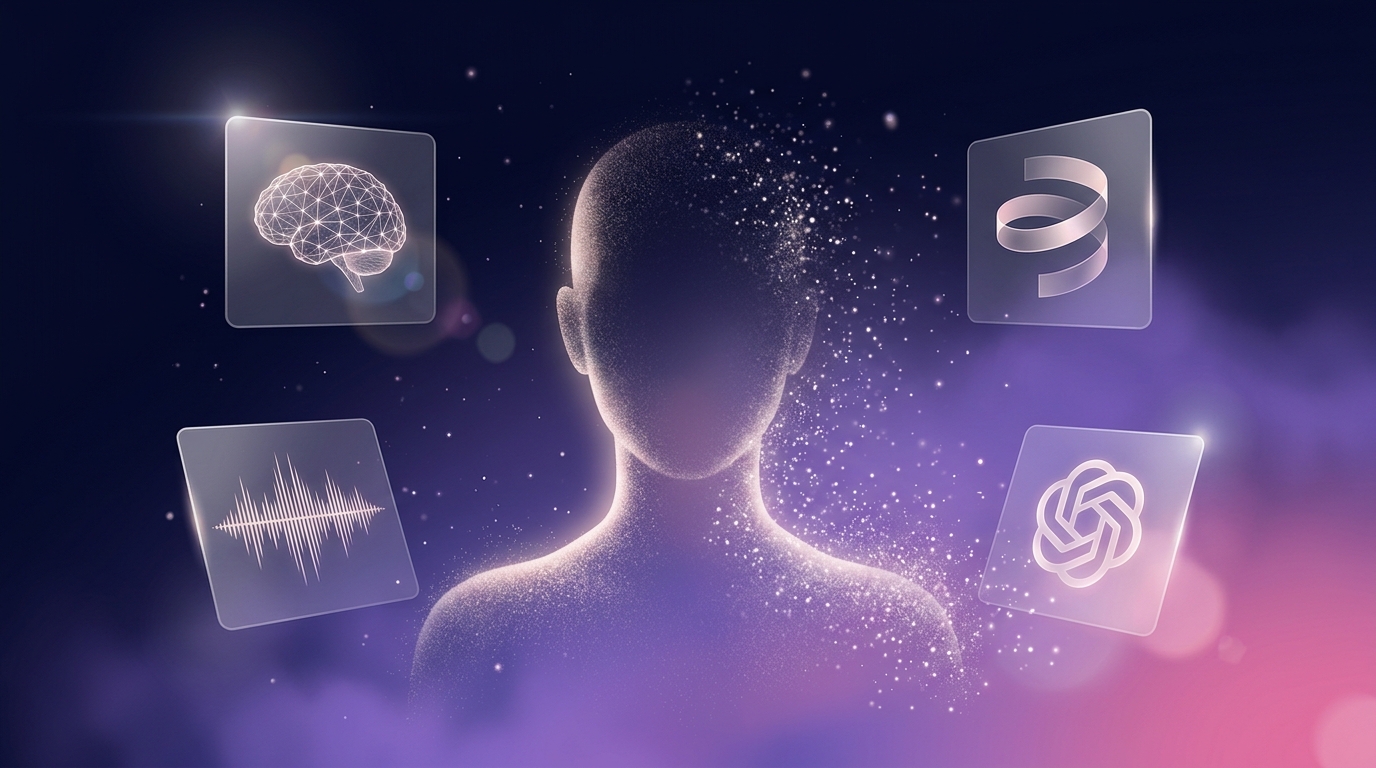
The technology behind that distinction comes down to four pieces working together:
- A large language model (LLM) — the brain
- Persistent memory — the long-term relationship
- Voice synthesis — the human warmth
- A personality layer — the consistency
Let's look at each one.
1. The brain: large language models
Every modern AI companion sits on top of an LLM — a model trained on a huge amount of text to predict what word should come next. Today's leading models (Google's Gemini 2.5, OpenAI's GPT-5, Anthropic's Claude 4) can already produce replies that are emotionally aware, contextually grounded, and — crucially — consistent across hours of conversation.
In TidalDream, every message you send is sent to a model, processed in real time, and returned as a reply. Without you noticing, the model also gets fed:
- The character's personality definition (a short paragraph that "is" the character)
- The last few minutes of your conversation
- Relevant snippets pulled from long-term memory
That last piece — long-term memory — is what separates a companion from a chatbot.
2. Persistent memory: how AI remembers
A naive chatbot forgets you the moment you close the tab. A real companion doesn't.
In a well-designed AI companion app, memory is split into three layers:
- Short-term: the current conversation (what you said 2 minutes ago)
- Mid-term: a rolling summary of your last N sessions
- Long-term: structured facts about you — your name, your job, the dog you mentioned last week, that joke you keep coming back to
When you send a new message, the app does a quick vector search through your long-term memory and pulls in the 3–5 most relevant facts. Those get quietly slipped into the prompt before the model replies.
The result: a companion that says, "Did you ever finish that book you were reading?" — and means it.
3. Voice synthesis: making it feel human
Text alone isn't intimacy. The shift happening in 2026 is that AI voices have stopped sounding like Siri.
Today's top voice models can:
- Reproduce a specific voice from a 30-second clip
- Add emotion, breathiness, hesitation, laughter
- Stream audio with under 300 ms latency, so the conversation feels live
For an AI companion, that means you can give your character a voice that fits their personality — soft and slow for a thoughtful character, bright and quick for an energetic one — and it stays consistent every time they speak.
4. The personality layer: why your AI doesn't break
This is the most underrated piece. Without it, even the best LLM will drift — sounding caring one minute and corporate the next.
A good AI companion app pins down a character's personality with three artifacts:
- A system prompt that defines who they are, how they talk, and what they care about
- A few-shot example set showing the model 4–6 sample exchanges in that voice
- Guardrails that quietly steer the model back if it strays
If you've ever tried building a character on a generic LLM and watched it slowly turn into "ChatGPT in a wig," it's because all three of those pieces were missing.
What makes a great AI companion in 2026
Most AI companion apps in 2025 chose one of two extremes — either pure roleplay with no memory, or pure productivity with no warmth. The interesting work in 2026 is in the middle:
- Long-term memory that's actually long-term (months, not minutes)
- Voices that match the character, not generic TTS
- A way for users to shape their companion without writing a prompt
- Hardware that brings the relationship into the physical world
That last bullet is where things get interesting — and why TidalDream pairs the app with a dedicated companion device called Tidal Seal. But that's a story for another post.
Want to see all four layers in action? Create a character in 60 seconds and talk to them for ten minutes — the difference between a chatbot and a companion will be immediately obvious.
Visit TidalDream